Strawberry Poke Cake

I was feeling adventurous this most recent Mother’s Day, and I tried making a Strawberry Poke Cake. This recipe is SO easy and SO delicious! It’s perfect for a hot day because it’s really refreshing and light! 

Here’s what you’ll need:

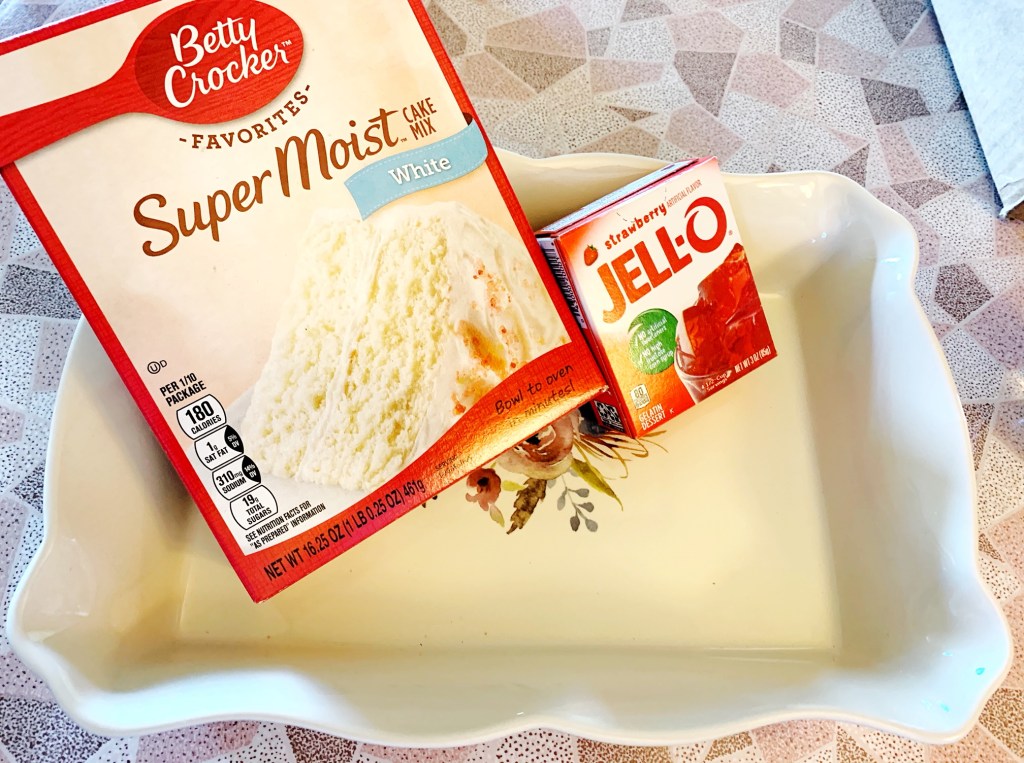
  • 1 box of white cake mix & all listed ingredients 
  • 1 regular sized tub of cool whip
  • 1 box of strawberry Jello mix
  • 1 container of fresh strawberries 

Now, you’ll need to go ahead and make up the white cake, just as instructed on the box. I suggest making it in a 9×13 pan, preferably glass, but metal should work fine, too, if that’s what you have. As always, preheat while you’re mixing so you shorten your wait time. 

Once the cake is in the oven baking, you’re going to want to cut your strawberries and make up the Jello liquid. I’d cut the strawberries first, rinsing and slicing and setting aside. 

The Jello only takes a few minutes, so I suggest doing it toward the end of your cake baking time. If your cake takes 25-30 minutes, maybe in the last third of your anticipated cool time, so at about the 20-25 minute mark. 

Boil one cup of water on the stove and get one cup of chilled water ready. One the stovetop water is boiling, pour it into a container with the cold water. (I use my glass measuring cup because it easily holds over two cups of liquid with room to stir.) Then, add in your Jello mixture and stir until it’s no longer settling on the bottom. Set this aside for use in just a few minutes!

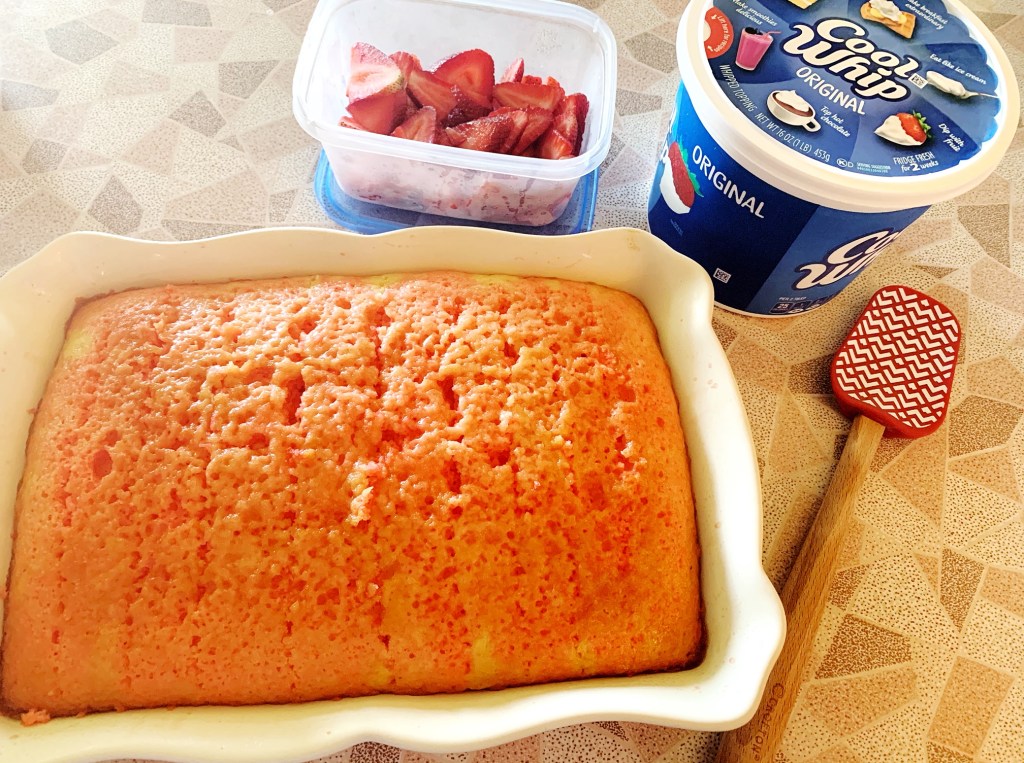
When the cake is done, let cool on a non-heated surface (the stovetop isn’t super ideal, since the oven has been hot recently). Then, poke holes in the cake. My first time making a poke cake, I thought they might have to be perfectly even. Since then, I’ve experimented and if they aren’t in even lines, it’s not an issue. Poke your small holes however you like – random or organized – whatever makes you happiest. I used a fork to make my pokes the first time, but the second time I used a new bamboo skewer and it worked just as well. 

Once the cake is sufficiently poked, you can slowly pour your liquid Jello mix across the top of the cake. It’ll soak quickly into the cake and into the poked holes. 

Let the cake (now looking quite tinted) cool for a few more minutes. Once it’s fairly cool to the touch, you can use a rubber spatula to smooth on cool whip. It should cover the top of the cake and be thick and fluffy! 

Then, grab your sliced strawberries and place them on top. You can go for an organized pattern, but with strawberries, I personally wanted as many as would fit, so I took the more random approach. 

Put this in the freezer until about 35-45 minutes before you plan to serve! It’ll let the cool whip firm up a little bit, which will make cutting and serving easier. 

If you have leftovers, be sure to store those in the freezer too! Enjoy!

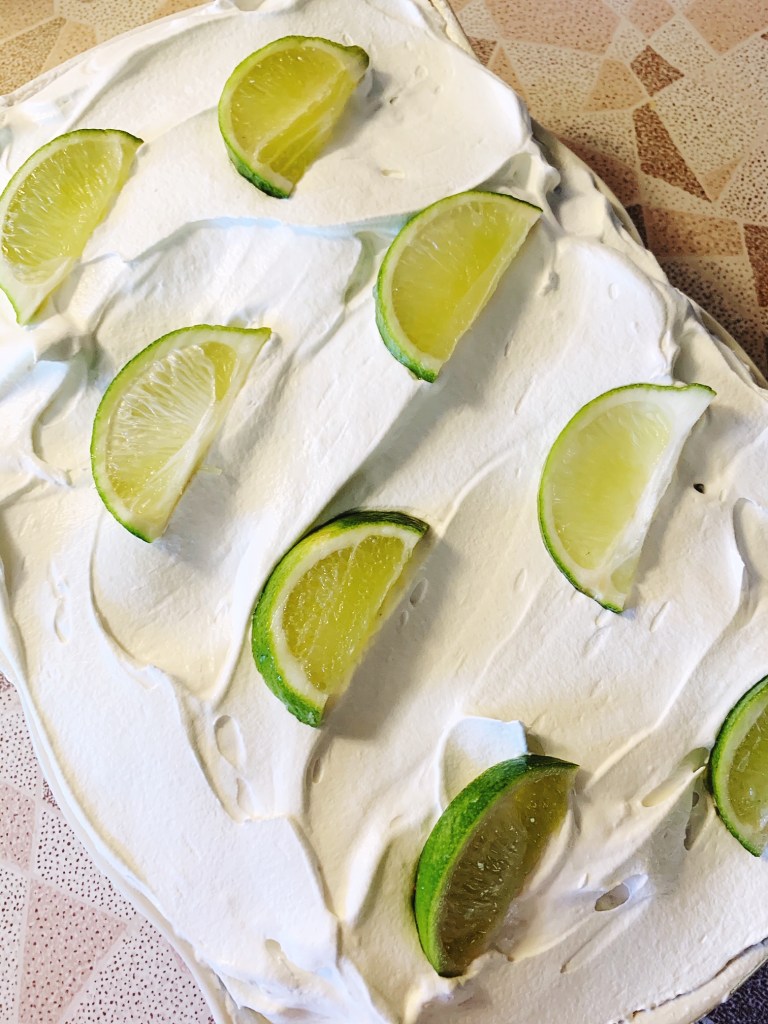
You can also substitute the strawberry flavor for others. Here are some pictures of a lime poke cake I made recently by just simply substituting the strawberry Jello for lime and nixing the sliced strawberries for thin lime wedges as garnish on top. It was super refreshing on a hot summer day! 

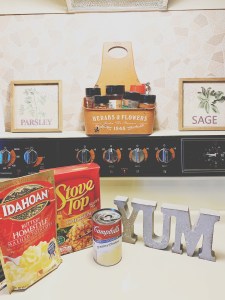
Simple Chicken Casserole

This recipe has come to you on the blog because it’s been requested recently. I shared a picture on my Facebook and Instagram accounts, and several of y’all reached out or commented to ask for the details.

I recently made this for my boyfriend, and he said – and I quote – “hey, this is bangin’!” So, in the words of Jake, here’s my bangin’ – and oh-so-easy – chicken casserole recipe.

Chicken casserole is sort of like meatloaf – it’s a little different for everyone, and you typically like the kind your momma made you when you were growing up. (I actually think that chicken casserole is maybe a regional/southeastern thing, since I didn’t have it growing up for the first half of my life in Ohio.)  Despite this, I’ve had very good response to this dish, so I hope you will enjoy it! It’s perfect for a day when you’re wanting some good old-fashioned comfort food!

Here’s what you’ll need:

  • 1-2 frozen chicken breasts
  • 1 box of chicken flavored stuffing
  • 1 can of cream of chicken soup
  • 1 packet of mashed potatoes

First, put your frozen chicken in the crockpot. It can be on high for 4 hours or low for 7-8 hours. PRO TIP: You don’t need to add any water/broth to your chicken; because it’s frozen, it’ll thaw and create the moisture you need while it slow cooks.

When your chicken is done cooking, it should fall apart with minimal effort from a fork. At this point, pull the chicken out and shred with a fork (or two if you prefer the dueling fork scenario).

Preheat your oven to 325F.

Using the instructions on the packages, make your stuffing and your mashed potatoes. Once both are done, you’re going to spray an 8×8-inch glass pan with non-stick spray. (If you don’t have an 8×8 at the ready, any somewhat-similarly sized casserole dish should do.) Then layer in your mashed potatoes. You’ll likely want to use a rubber spatula to smooth them out, as you’ll need them to fill the entire bottom of the glass pan.

Next, open up your can of condensed cream of chicken soup. Do NOT add water and do NOT heat. As gross as it’s going to look, spread this thick mixture – right out of the can – on top of your mashed potatoes. Spread as evenly as possible. Then, create a layer of shredded chicken.

Your final layer is going to be your stuffing. I like to make sure really fluffy, pretty pieces are on top of mine for the sake of presentation. Y’all know I like to set a pretty table!

Once the layering is finished, place it in your oven for about 25 minutes. While that’s cooking, I like to make a vegetable as a side – particularly bacon green beans or glazed carrots – but any vegetable of your choice will do!

When your 25-ish minutes are done, serve & enjoy!

If you make the recipe, comment below to let me know how it goes. Would love to hear from your kitchen!

Italian Pasta Salad

It’s summertime (or it’s supposed to be) and we have a TON of holidays coming up that might require you to bring a dish. Today, just in time for Memorial Day weekend, I’m going to share my favorite side that can go with any type of cookout or potluck lunch or dinner: Italian pasta salad!

You may be thinking that you can buy that in a box at the grocery store. And you could. But you shouldn’t. This recipe is so delicious and made with fresh veggies – but it’s also very easy.

You do want to make this with at least 12 hours before your event to allow for a proper amount of chilling time.

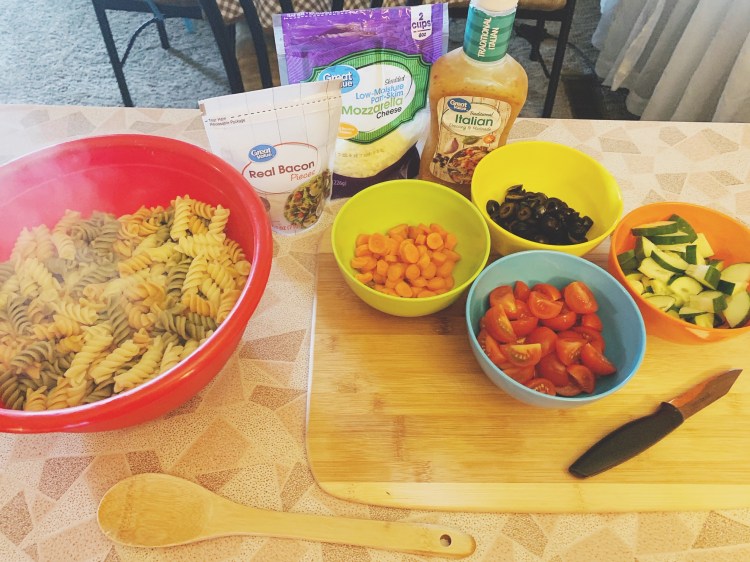
Here’s what you’ll need:

  • 1 box tri-colored rotini noodles
  • 1 bottle of Italian dressing
  • Bacon bits (real, not imitation)
  • Shredded mozzarella cheese
  • 1 cucumber
  • 2-3 full-sized carrots
  • 1 container of grape tomatoes
  • 1 small can of sliced black olives

Start by boiling your noodles. As they cook, you can begin rinsing and preparing your vegetables. You’ll need to drain the can of olives and rinse them. You’ll want to peel your carrots a little, then chop up into bite-sized bites. Wash down your cucumber and slice – then I personally like to cut the slices into halves or quarters to make them more bite-sized. For the tomatoes, I recommend halving them after rinsing. Keep all of your vegetables at the ready.

Drain your cooked noodles in a strainer and rinse with cold water. Then, add your noodles to a large bowl. Empty in your vegetables – saving a few of each for the top for the sake of pretty presentation. Pour in most of your bacon bits as well.

Then, empty your Italian dressing into the bowl. Stir well to ensure that all noodles get covered in dressing and to ensure that your vegetables are evenly dispersed. At this point, I suggest bagging your set-aside vegetables for use later and storing in the fridge with your leftover bacon bits and your shredded cheese.

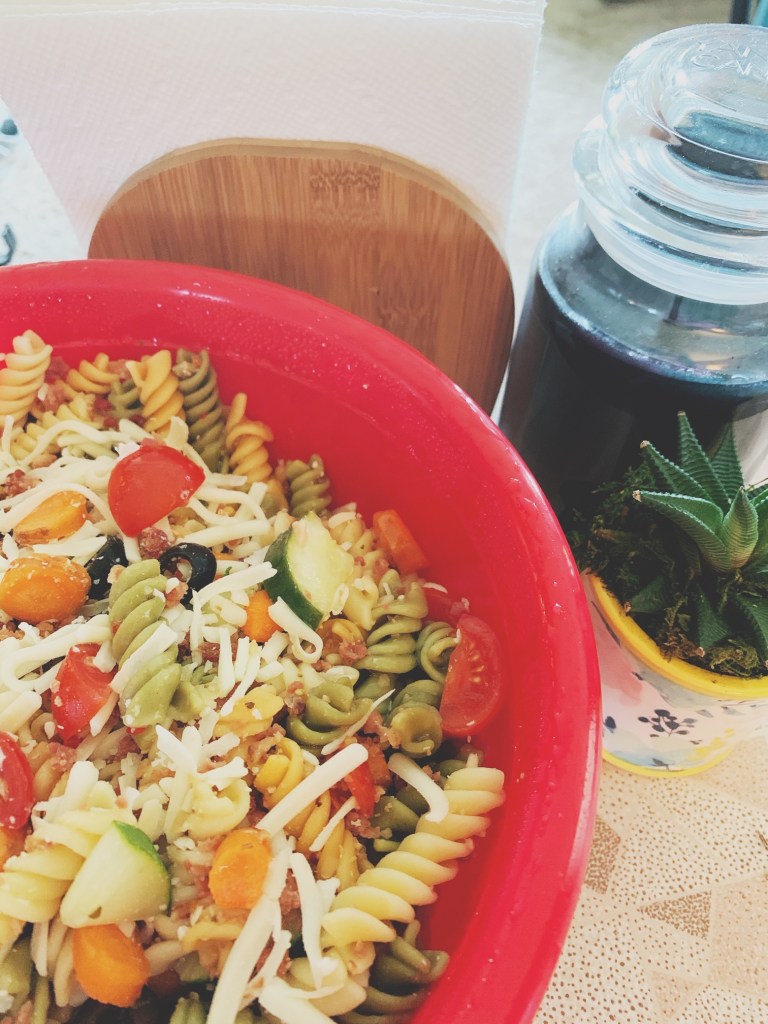
Chill your pasta salad dish, as is, in the fridge until your event. Just prior to leaving, stir and ensure that the dressing is still evenly distributed. Then, add cheese, bacon bits, and the remaining veggies to the top to give a really appealing presentation.


Enjoy!

DIY Backyard Bouquet

One of my absolute favorite touches to any room in my house is a floral arrangement. I’m the kind of girl who buys herself flowers just because they bring me joy. Buying premade arrangements can be expensive – and ordering a custom arrangement even more so. If the grocery store has some cheap individual stems for sale – a bunch of daisies or lilies and some baby’s breath or greenery – I’ll often throw them in my cart as a “treat yo self” kind of purchase and then reward myself for a job well done after I put away all of the groceries by allowing myself some time to arrange.

Before I was divorced, when I owned a home with my then-husband, I found that I really loved to garden. Planting my own flowers, getting them to grow and bloom, and then using clippings in my home, was really therapeutic and rewarding. For me, it was a part of caring for my home, a personalized touch in my attempt to be a homemaker. While there are a lot of habits I hope I don’t carry forward from my first marriage, my desire to incorporate the products of my own green thumb in my home is one I do wish to maintain.

I’ve been very fortunate in my rental home. The woman who owned this house originally clearly loved it. The plants that are in the flower beds are gorgeous – a tall hydrangea shrub, two rose bushes, and a peony bush – and just required some trimming back this year. I was nervous – afraid that I’d trim them back too far – but just a few weeks later and the green new growth is popping in the flower beds!

I’ve also added a lot of my own plants in various planters around the house (see my Spring Décor Tour and my DIY Porch Tiered Pots and my Instagram account, @kate_witha_twang, for even more recent photos).

To bring some of that gorgeous green indoors, I’ve made several different arrangements. Other than being much more affordable than store-bought stems or florist arrangements, I also love the personal touch of having grown and cared for the plants myself.

Today, I’m going to break down how to turn your outdoor plants and blooms into a sweet arrangement for inside your home. The flowers and plants I use can be substituted, and I’ll list some suggestions along the way.

First and foremost – survey your yard. What do you have? You want 1-2 sources of greenery – “back drop plants” if you will. You’ll also want 1-3 types of blooms to fill out your arrangement and add some color.

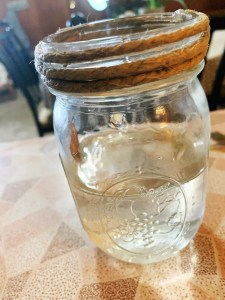
Before you go ahead and start clipping – be sure to determine what you’re doing to put this arrangement in. You’ll need a container of some sort that can hold water. For this tutorial, I’m using a mason jar, but you can also use any other kind of jar, a bottle (think a wine bottle, glass coke bottle, et cet), a vase (doesn’t have to be expensive – it could be picked up at Dollar Tree) or other container. I prefer smaller containers rather than larger wide-mouthed vases. If you use a tapered-open vase (one with the widest part being the open top), you’ll need a lot more filler. I also find that shorter containers, like the mason jar, are nice because your stems don’t have to be super long.

Fill your vase/jar two-thirds full of water.

Now that you know what you’re using, you can head outside with a pair of floral clippers or kitchen scissors. When you clip the stems of greenery or flowers, be sure to clip further down than you think you’ll need.

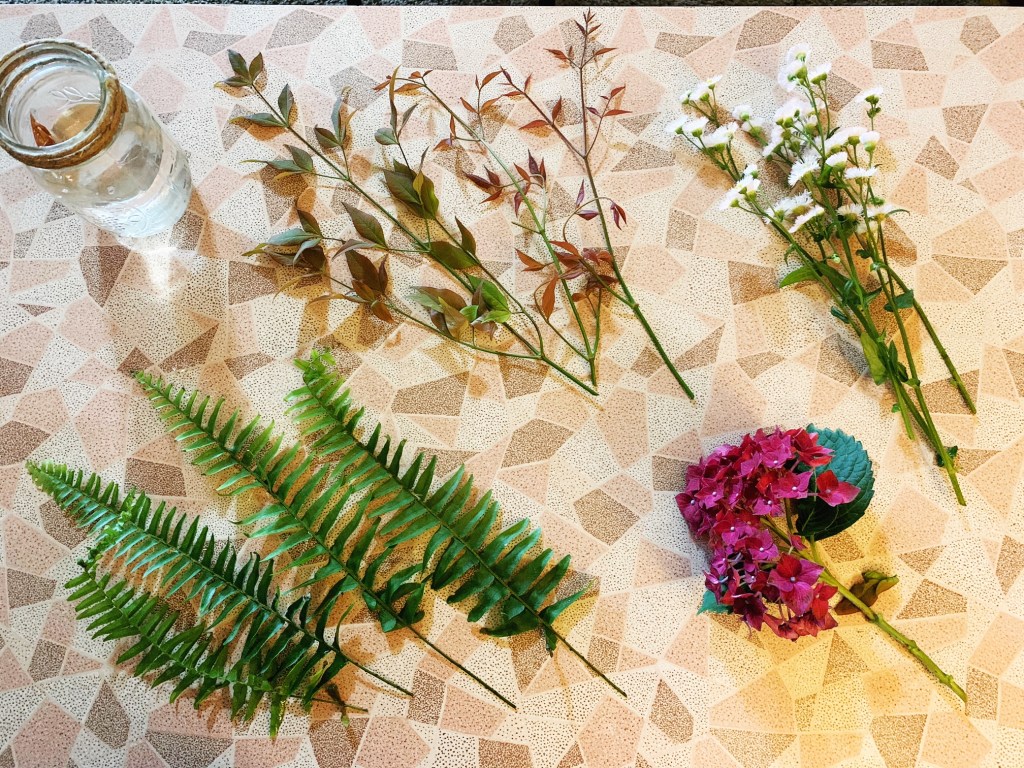
Once you have everything you think you’ll need (and I’d advise clipping a few extras of the greenery just in case), find a flat clear surface to lay everything out on. I have a bar between my kitchen and living-and-dining room space, and I use that countertopped bar for tasks like this often.

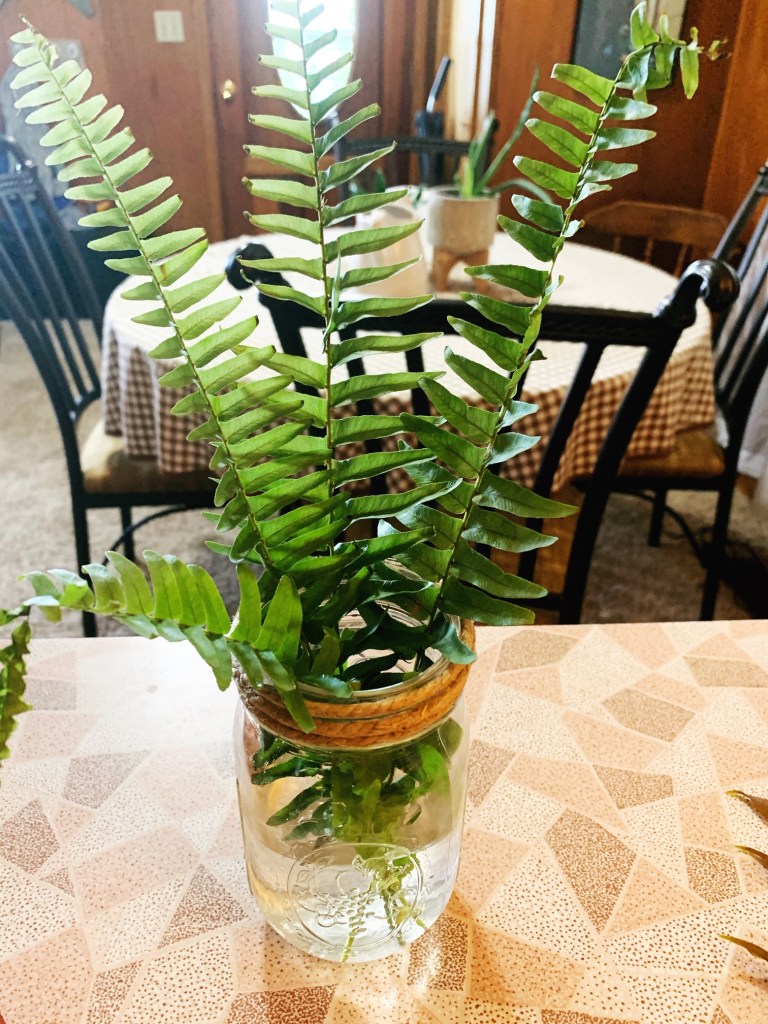
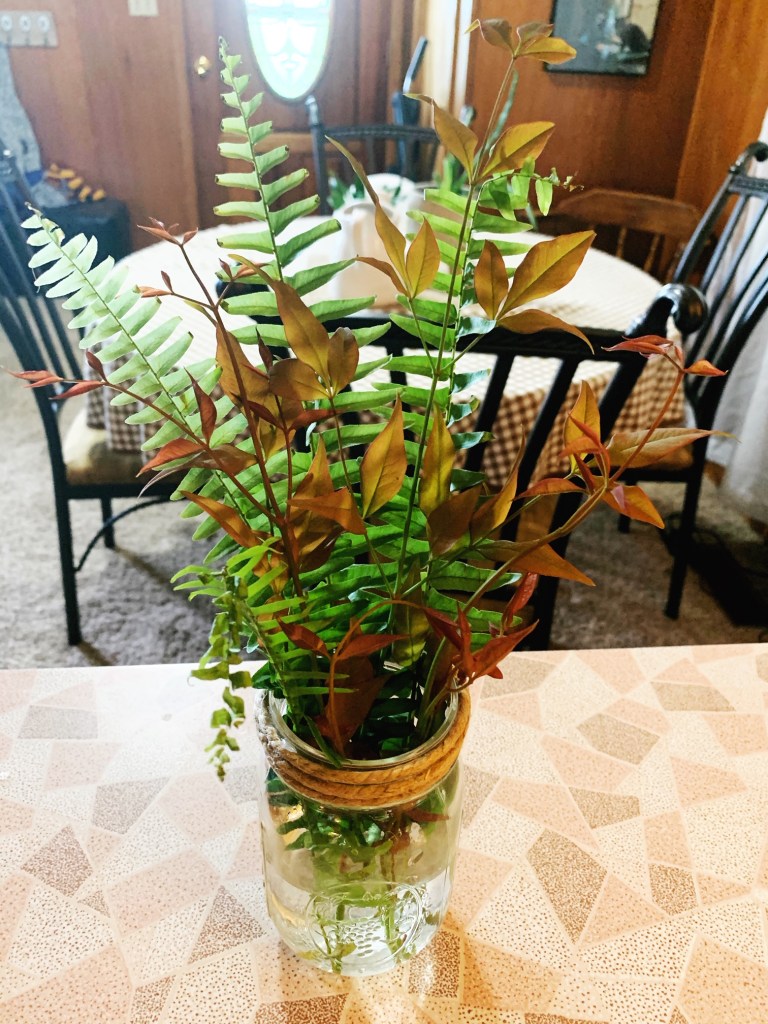
You can see that I’ve chosen some stems of fern and some reddish new stems from a nandina shrub – these will be what I’d call my “back drop” stems.

You could also use a few clippings from boxwood shrubs, larger hosta plants, long thin leaves of monkeygrass, or tall caladium plants as some other suggested types of greenery.

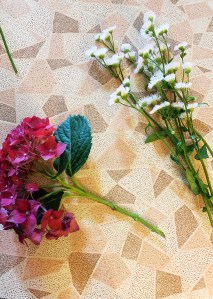
For my floral stems, I chose two different flowers to feature. The first was a few stems of daisy-like fleabane, found in the fields that touch my fenceline. They honestly might be a wildflower, might be a weed, but either way they’re a nice secondary flower. My feature flower is one stem of purpleish-pink hydrangea. I like to have one feature flower – whether it’s a feature due to color or style – to kind of draw the eye inward in your arrangement.

You could also use peonies, roses, daisies, lilies, irises, sunflowers, or coneflowers, for your features. You could potentially use baby’s breath, small-bloomed wildflowers, black eyed susans, or the blooms from salvia for secondary flowers.

Before adding your stems to your water-filled container of choice, be sure to trim your stems to your desired length. When you trim your stems, be sure to cut them at a diagonal angle. This seems minute but will add a couple days to the vitality of your arrangement, as angle-cut stems will allow for increased water intake.

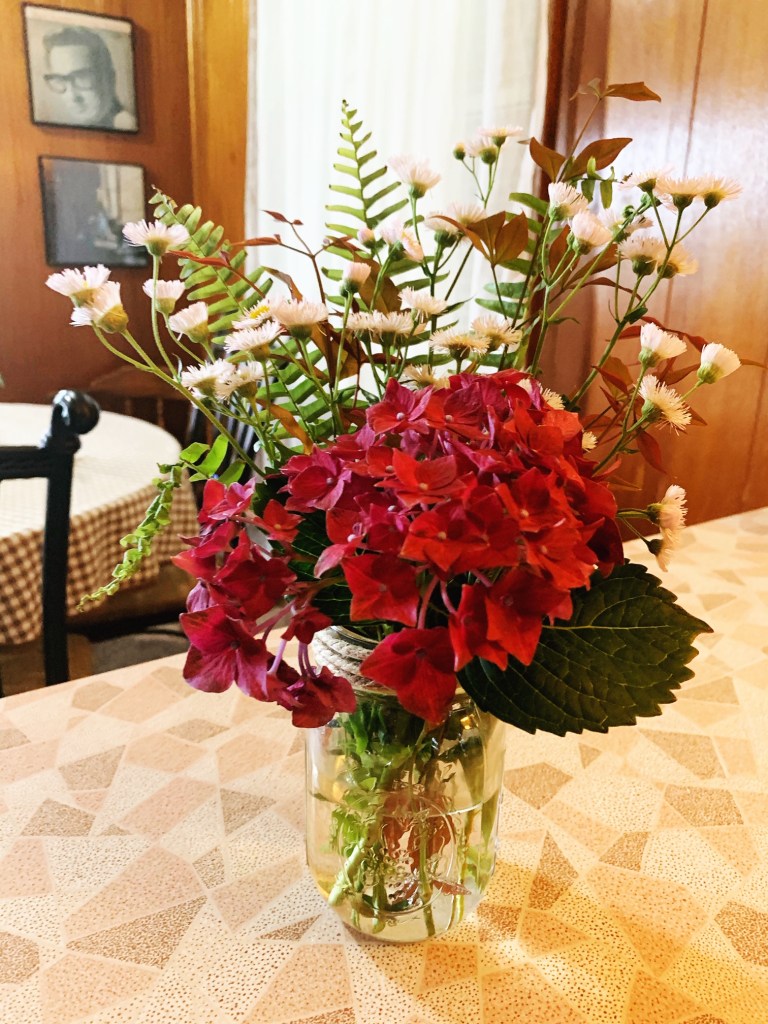
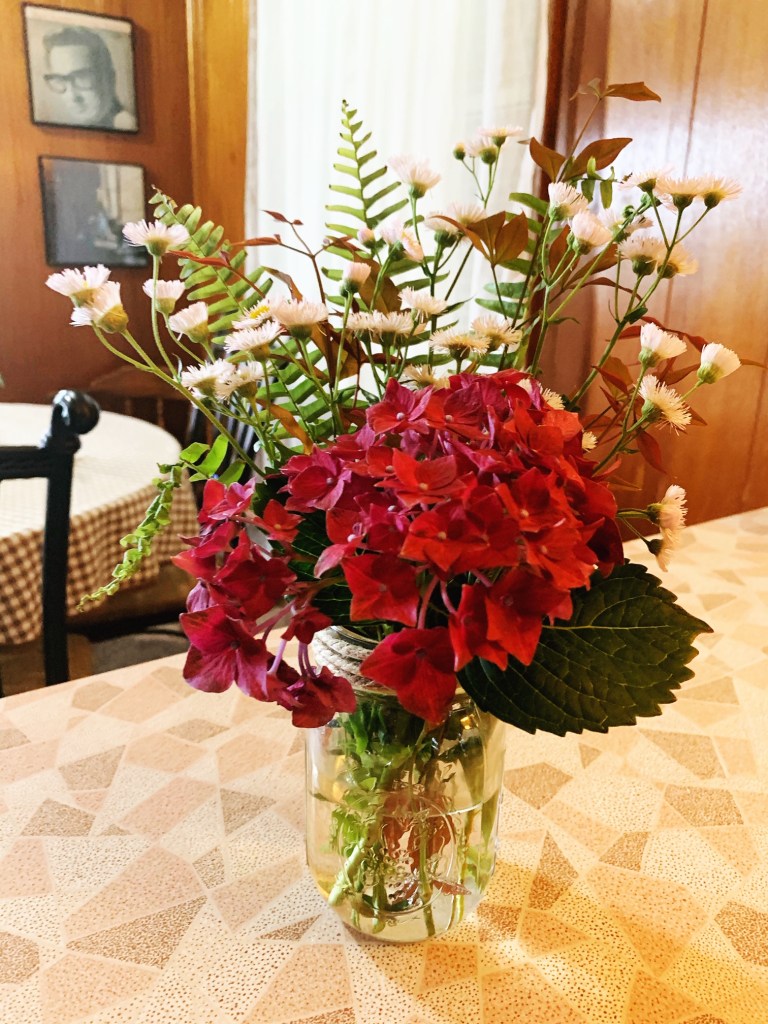
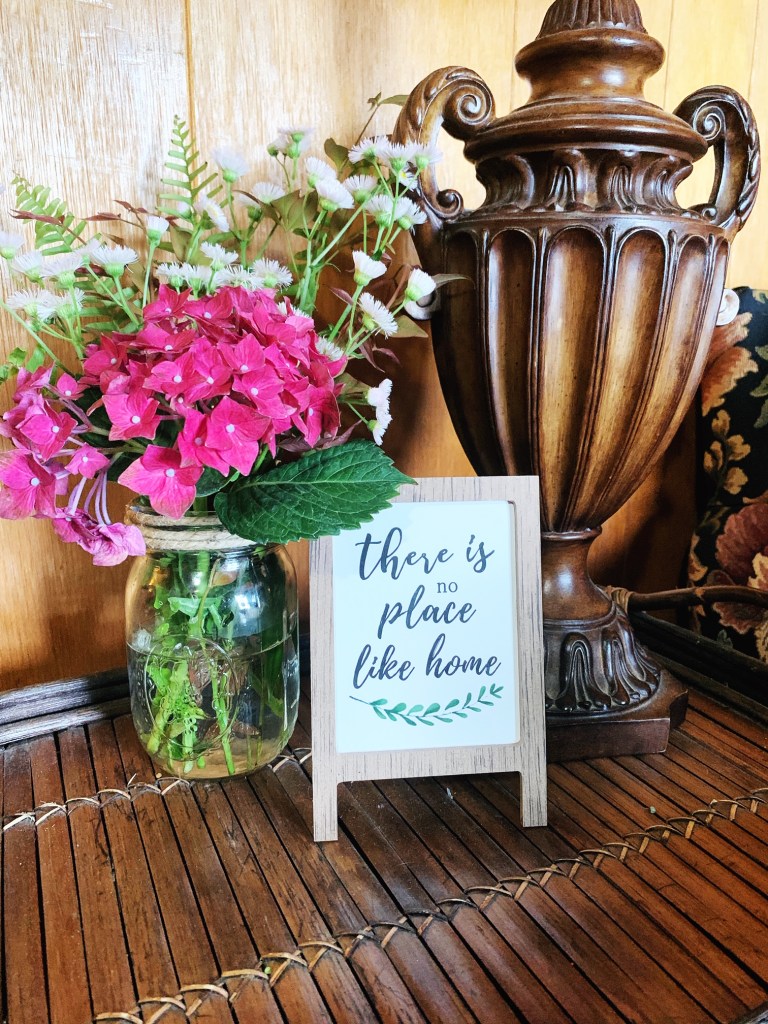
I’ll go ahead and arrange the ferns and the nandina stems across the back of the mason jar (or, if you prefer, vase) first. Then you’ll see that I added in the fleabane, then the hydrangea last to complete the arrangement.

With plain tap or well water and angle-cut stems, you should get several days – maybe up to a week – with your arrangement, depending on your flower selection.

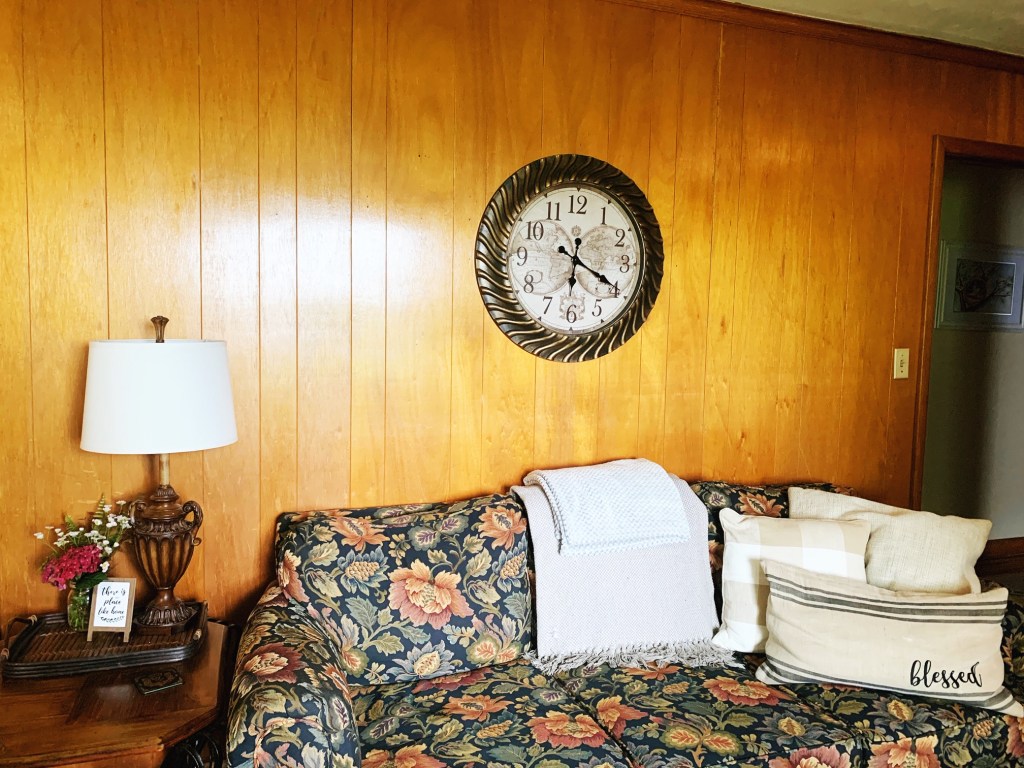
Here are some pictures of this arrangement in my living room. I love how it adds a really nice pop of color.

4 At-Home Mother’s Day Gift Ideas

With stay-at-home orders ending in some states, facing lessened restrictions in many, and still fully intact in others, this upcoming Mother’s Day may look a different, may present some unique challenges in how to gift mom, grandma, or another special woman appropriately.

If you’re feeling safer at home, despite whatever you state’s requirements might be, or if COVID-19 has effected your finances, hopefully these four ideas will help you celebrate the holiday in a thoughtful way!

These can be great sensory and coordination crafts for your kiddos to make as well!  (Momma hens, feel free to send the link to your poppa bear or your children directly, if you need to share a hint or two.)

***

#1: Flower Seed Card

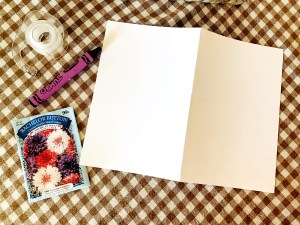
If you have seed packets around – or if someone in your home can make a quick Dollar Tree run and pick up some floral seed packets (just a dollar for a couple packets!) – you can make a very sweet and seasonal card. 

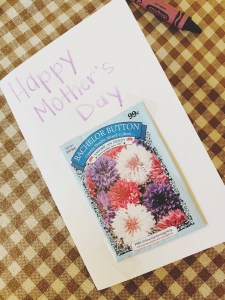
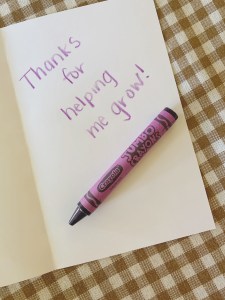
Simply fold a piece of paper – printer paper, notebook paper, construction paper, or card stock – in half to make a side-opening card. Tape or glue the seed packet to the front center of the card. Using the writing utensil of your choice, craft a fitting message. I personally like the one shown here – “thanks for helping me grow!” – to fit the theme with the garden seeds. 

#2: Home-Baked Cookies

Who doesn’t enjoy something sweet and baked with love? 

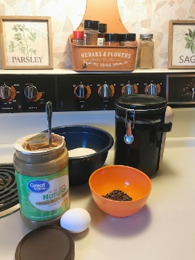
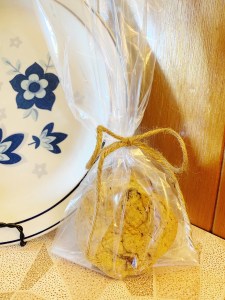
Several weeks ago, I posted this delicious and easy-as-could-be recipe for peanut butter chocolate chip cookies. Most kitchens have these ingredients at the ready, so this recipe is accessible and simple, while still being quite a crowd-pleaser! 

I’d suggest bagging and tying with twine or ribbon, as pictured here, for a sweet gift-giving experience! 

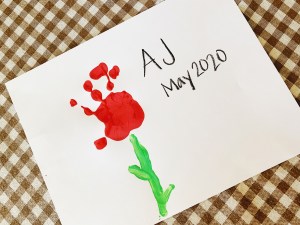
#3: Flower Finger-Painting & Handprint Art

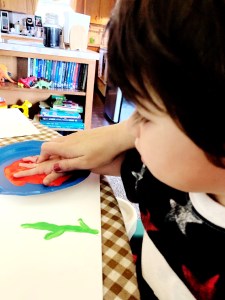
This one was PERFECT for my little one! At 23 months, this was a fun paint adventure for him – even if I was at the ready with hand wipes and paper towels! 

You’ll need two colors of paint (green and another color of your choice), some paper, and a writing utensil. 

To start, simply dip one fingertip in green paint and paint a long stem. Don’t worry about any mess ups – they can be turned into leaves on the stem! Then, pouring the second color of paint on a flat surface like a paper plate, rest your child’s palm flat, collecting paint across the palm and fingers before laying his/her paint-covered print over the painted stem. 

I chose to put my child’s initials and the month and year on the page as a keepsake. 

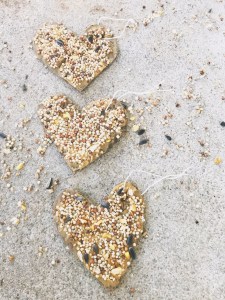
#4: Cardboard Bird Feeders 

Earlier during the many stay-at-home orders throughout our country, I wrote a post featuring 5 Things to Do at Home with Your Toddler. In that list, I shared how to make a cardboard and peanut butter bird feeder. I think, with the season that Mother’s Day is in, this would make a perfect gift for mom’s or grandma’s garden! 

Simply cut a piece of cardboard into your desired shape (I made a heart), punch a small hole in the top for hanging later, and spread peanut butter over one side. Then, cover that side with bird seed. Then, I use twine or string to create a loop through the previously punctured hole. I put mine in the freezer for a little while to harden up before gifting or displaying. 

***

Many of these could be done together or done for more than one recipient if desired. 

Have you made any of these gifts before – or received one? Do you have plans on what you’re giving this Mother’s Day? 

Turkey Kielbasa One-Skillet Dinner

If you’re from the South, you might be wondering what in the Sam Hill kielbasa is and how you’re supposed to pronounce it! 

Most of the people I know in East Tennessee call this “smoked sausage.” Up North, in Ohio and the surrounding states, where most of my extended family lives and where I was raised for about a decade of my childhood, it’s called its Eastern European name of kielbasa (pronounced: keel – bah – sah). 

I’m particularly a fan of the turkey kielbasa – it’s a little healthier than pork and a little leaner. 

This dish is one I experimented with, and I’m super pleased with how it turned out! 

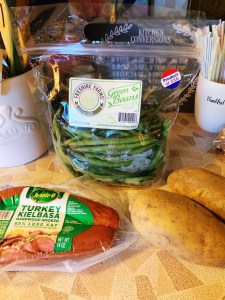
Here’s what you need:

  • 1 package of turkey sausage (14 oz, precooked) 
  • 2 large white potatoes 
  • 1 pack of fresh green beans 
  • Italian seasonings 
  • Olive oil

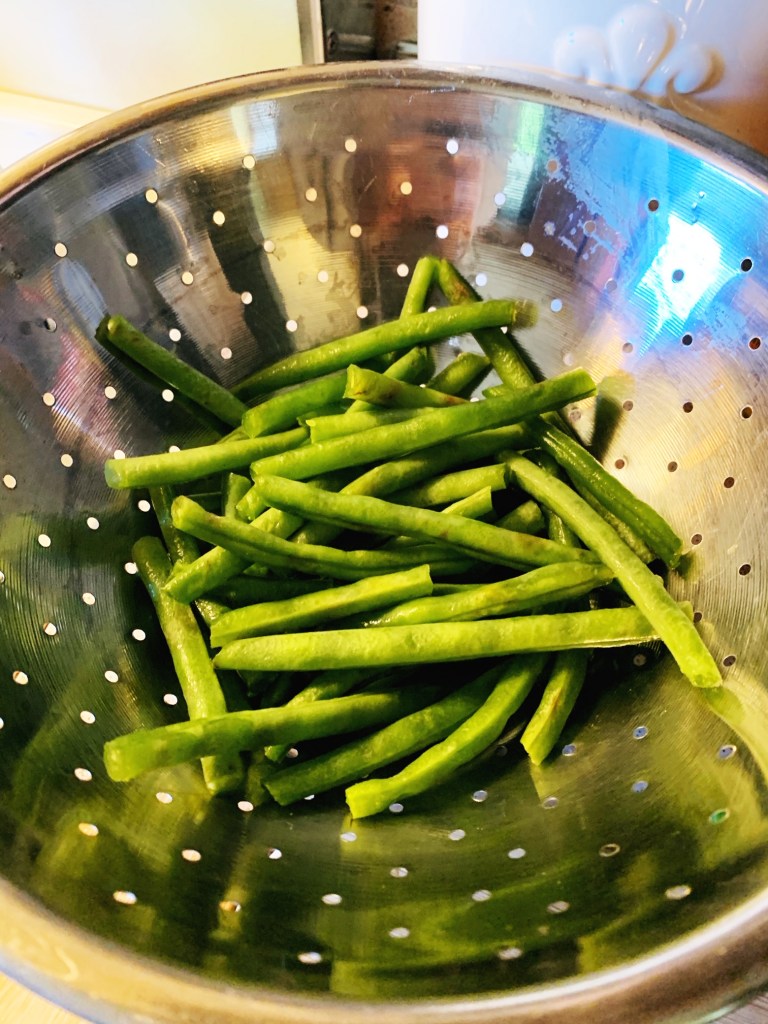
Let’s start by washing our produce! Scrub the dirt off of your potatoes. Then, snap your fresh green beans, by cutting off the ends, and rinse them in a colander. 

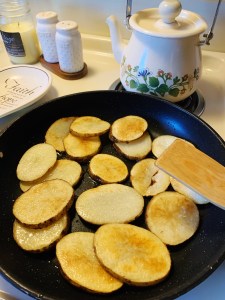
Drizzle a small amount of olive oil into a large skillet on a high heat (think 8-9 out of 10). Then, as it heats up, slice your potatoes into 2 centimeter-ish slices. Put the sliced potatoes in the hot olive oil and fry them up, flipping as they cook. 

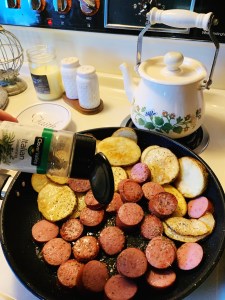
When the potatoes are golden, add in your turkey kielbasa, sliced into 3/4-1 inch thick slices. Add a little more olive oil as needed. These should be flipped as they cook as well, although I like a little browning on the meat personally. As the meat browns a little, I like to sprinkle in some Italian seasoning. (If you’ve been hanging around my recipes before, you’ve probably noticed that I’m a huge fan of Italian seasonings in my dishes.)

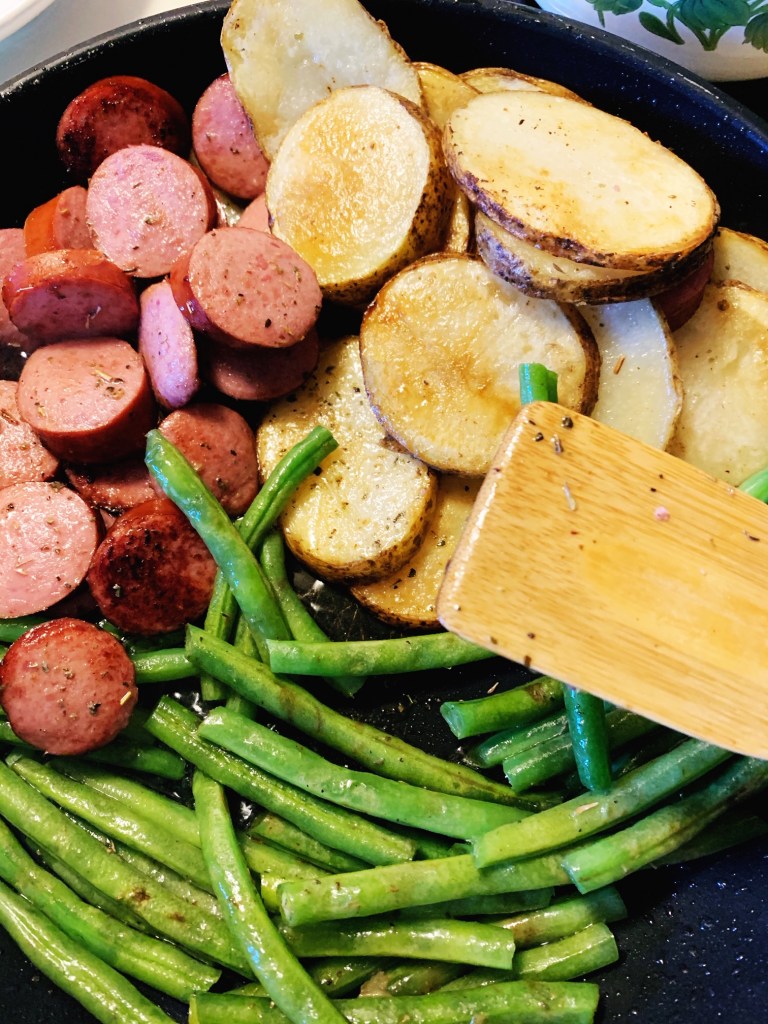
Once your meat is browning on the edges slightly, turn the heat down (think about a 6 out of 10). Then, add your snapped and rinsed green beans, pouring just a little additional olive oil over them. Turn these as you continue to cook for about 5-8 minutes.

At this point, the skillet is pretty full. Turning takes a little finesse so that you don’t spill everything out onto the stovetop. Just turn over or stir your food gently, and it should be manageable. 

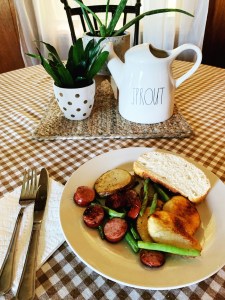
When you think your dish is done, taste test a green bean. You want to make sure they’re done enough to your unique taste preferences. Once these are done, the dish is ready to serve and enjoy! 

I like to pair mine with warm Italian bread! 

Clean up for this dinner is AMAZING – almost as amazing as the dish itself – you’ll only have a cutting board, one knife, a colander, and a skillet! 

Do you have a one-pan or one-skillet dish that you love? Do you call this smoked sausage or kielbasa? Comment below! 

Porch Tiered Pots & Sign DIY

My rental home has an interesting layout. The kitchen door of the house is, by the blueprint, a side door. The front door is in the living room. However, the family who built the house was rather clever. The best view faces away from the road and driveway, so they positioned the house to purposefully allow the front door, window, and porch to face the view of the farmland with the lake and mountains in the distance. It’s a gorgeous view.

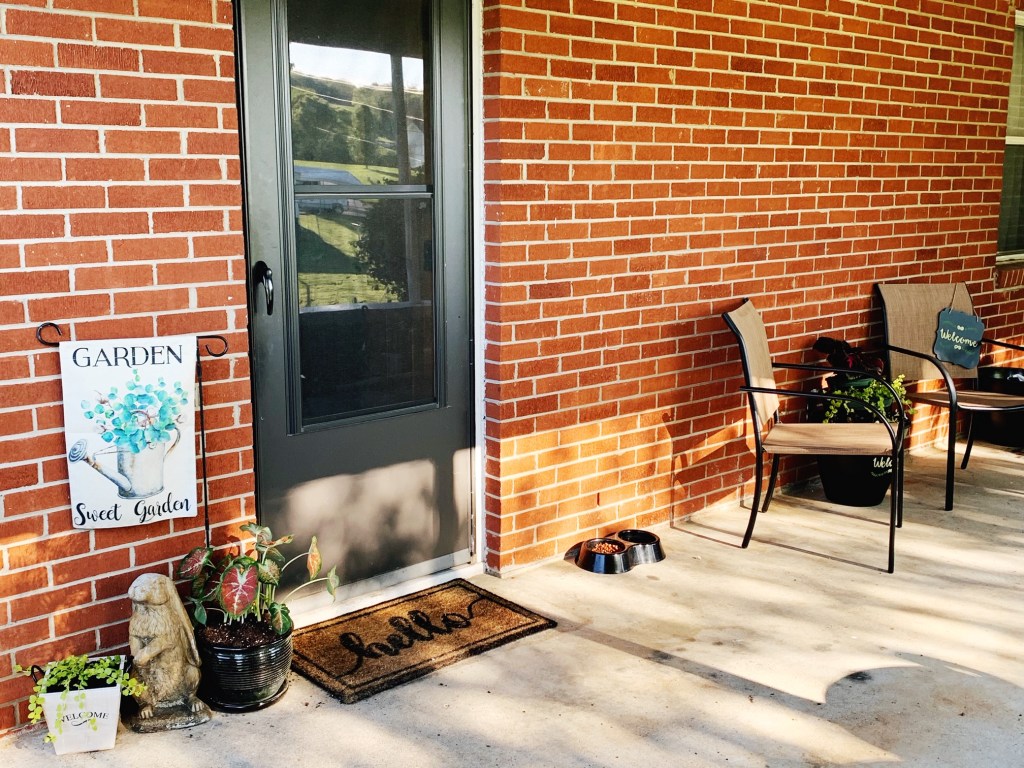
It also leaves me with two doors to decorate, as it means my kitchen door effectively acts as the front door in most situations. It opens onto the concrete and brick covered carport.

Carports have a nasty habit of collecting junk. We have a lot of junk on mine – and I was getting sick of seeing it every time I walked in or out of the house.

So I took on a carport-to-porch project.

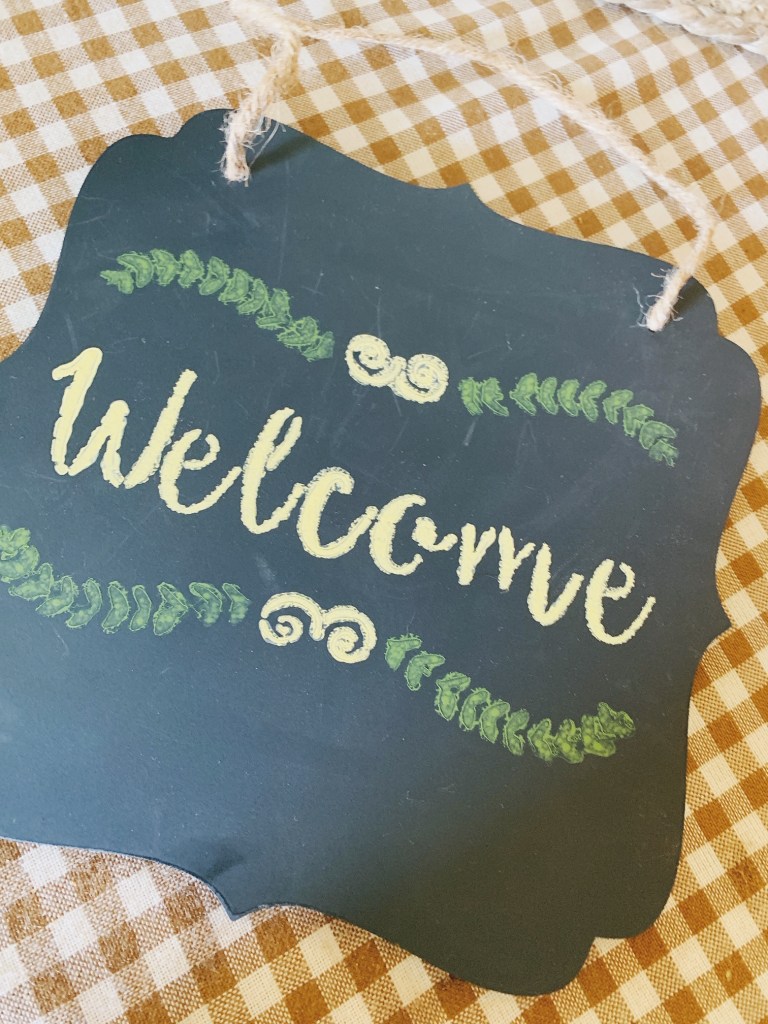
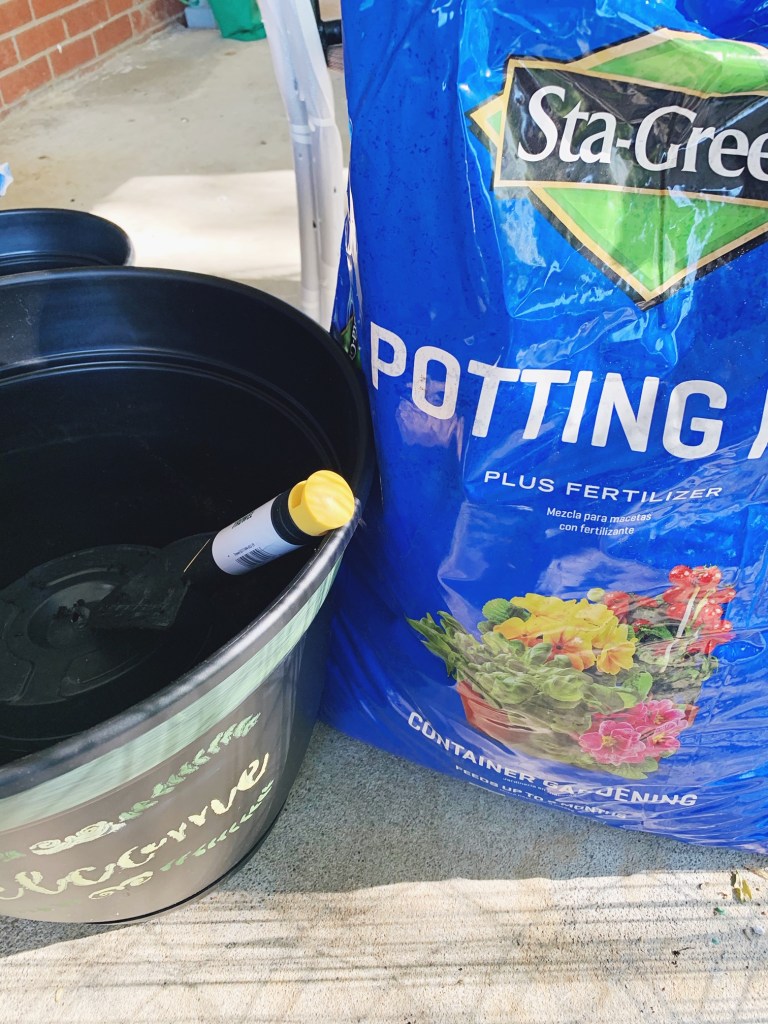
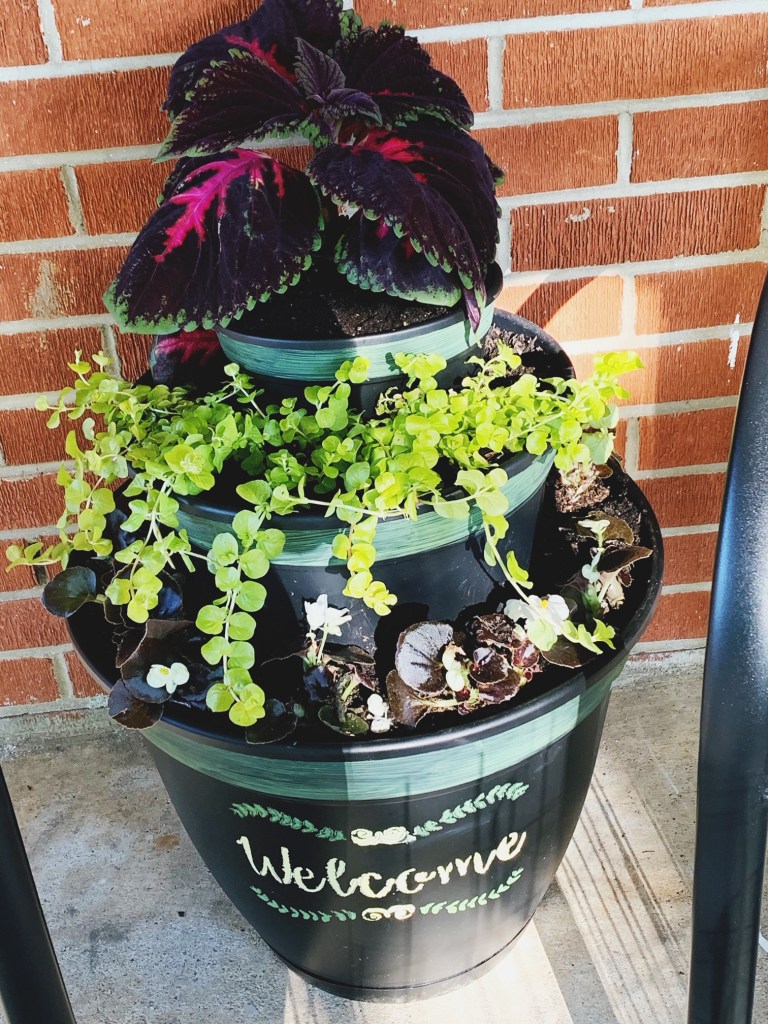
I bought 5 black plastic plant pots in various sizes (1 large, 1 medium, 1 small-medium, and 2 small), several shade-loving plants, a big bag of potting soil, and two outdoor chairs at Lowes. I also grabbed some supplies I already had at home – a plain black chalkboard sign, a sponge brush, a stencil, and some yellow and green craft paint.

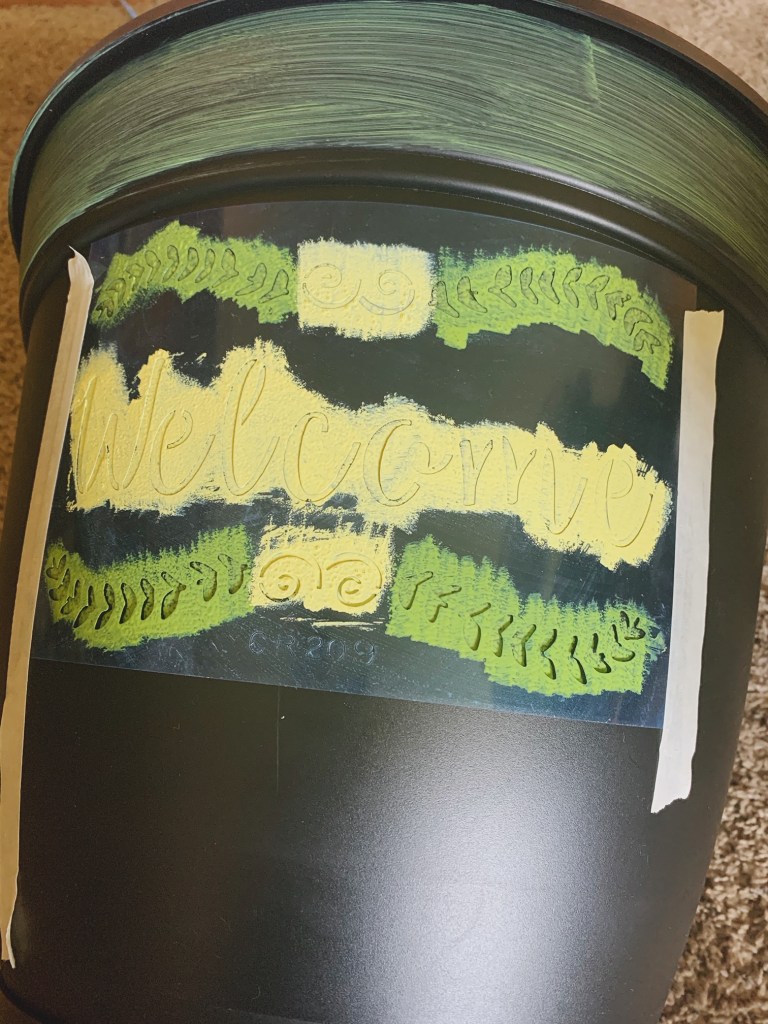
I started by taping the stencil onto the chalkboard and sponge-painting it. I used just a tiny bit of paint and dabbed it on gently with lots of small taps to make the paint as even and controlled as possible. Once dry, I untaped the stencil and rinsed it off.

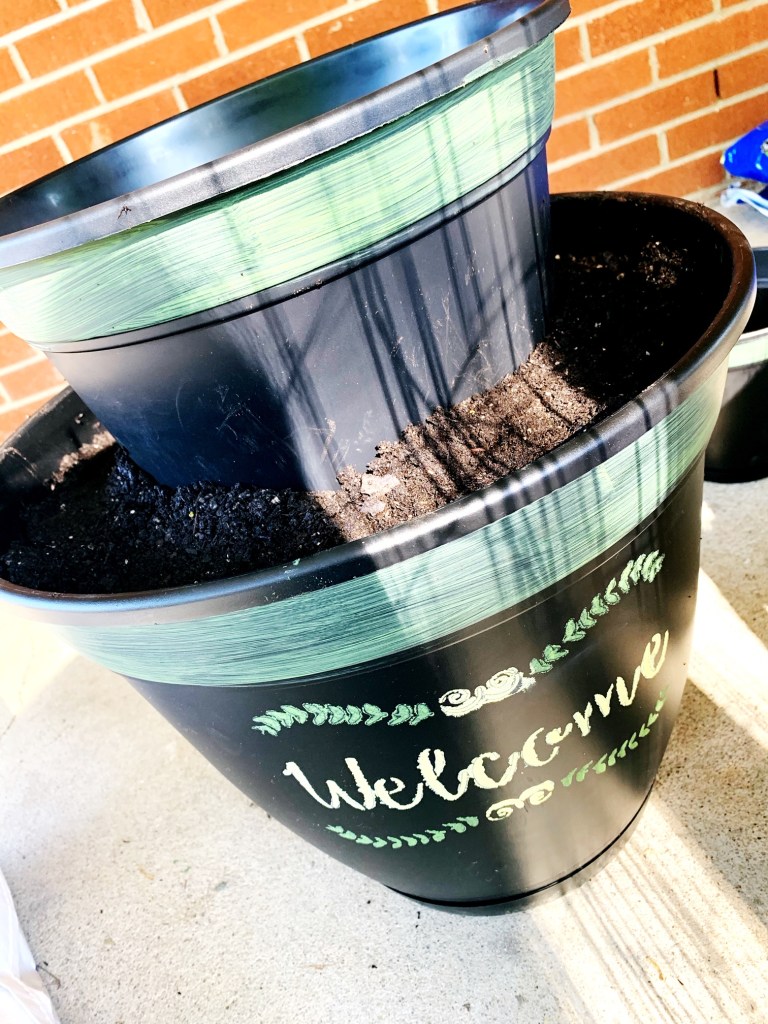
I then painted a green stripe around the top of three of the plastic pots – the largest, the medium, and one of the small pots. I really wanted the bright, cheerful colors to tie in, so I decided to use the same green and use the sponge brush to paint the wide, imperfect border, following the lip of the pots.

After the stripe was done drying, I used the same stencil on the largest of the pots. Because the pots are rounded, it is a little harder to position the stencil on their surface. I laid the pot down, so I could paint from above, and used the lip of the pot as my straight-edge guide to position the stencil. I did have to use extra tape and tape it down pretty securely. I used the same tapping method to paint on this stencil.

After drying, I pulled the stencil off and set it aside.

Once I was confident that everything was dry, I took the pots outside. Before filling the largest, I filled the small-medium one with dirt and flipped it upside down in the bottom of the largest pot; this became the base on which the next pot (the medium sized one) would sit. Before placing the medium pot, I began filling in with dirt around the base stacking pot. I did tap down the dirt several times to try and make a sturdy hold around the base pot. When stacking the medium one, I waited to plant until it was positioned – including using the small, non-painted pot, filled and upside down, inside as the base for the final small, painted pot.

Because my carport is covered and away from direct sunlight, I chose shade-loving plants. Begonias, creeping jenny vines, and coleus each have a layer in my final stacked planting ensemble.

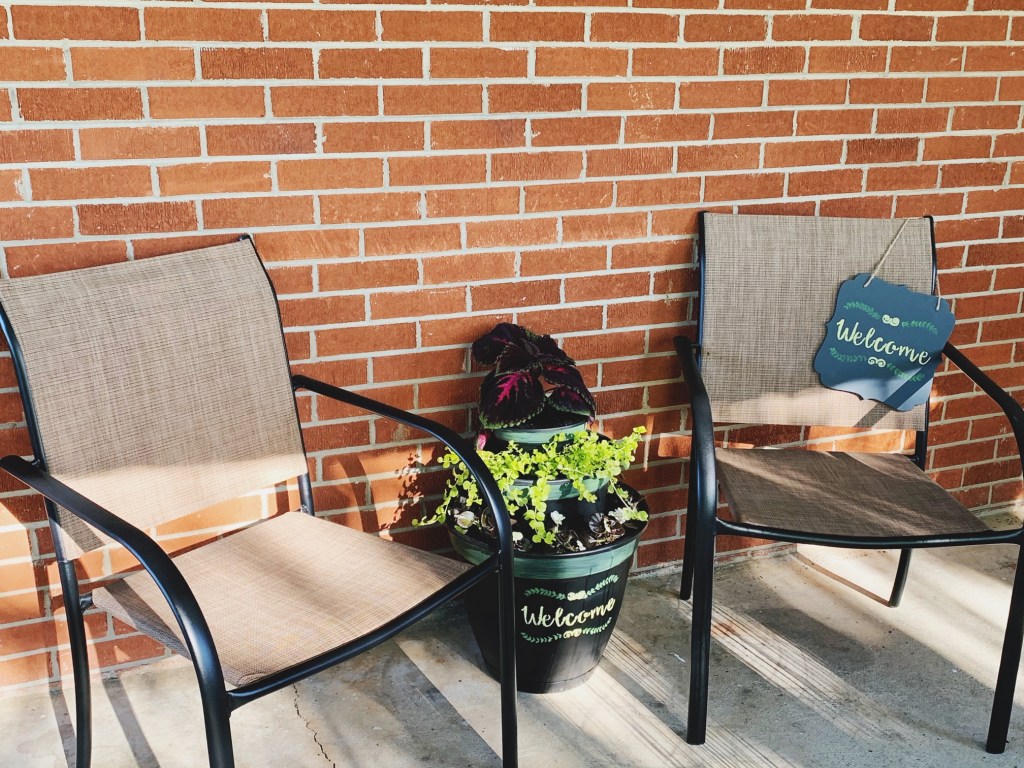
I placed these on the right side of my door with the matching sign and two outdoor chairs. These chairs were under $20 each at Lowes, by the way, so they were a deal for sure. The entire project, counting the dirt and plants used for this specific seating area cost under $100 – and that’s rounding up. So it can be done affordably if you’re just looking for a one-day project.

I plan to hang the sign, but didn’t have a brick hanger yet, and I also want to get some pillows that match the ones on my front porch bench (see here: front porch) for continuity in my connected outside spaces. I’m probably going to wait a little longer before I brave the inside of Walmart. I know everything’s opening up this weekend after COVID-19 closings and precautionary measures, so maybe I’ll run into the garden side of my favorite local Walmart to grab pillows and a brick hanger. (I’ve been doing pickup for my groceries and essentials during the stay home measures, and I LOVE it. I might continue using pickup in the future for my big shopping trip. SO EASY.)

Once I add the pillows and hang the sign, I’ll try to remember to post an update photo!

What do you think? I’m pleased with the way it makes my side door less cluttered and more inviting. Do you have a space that needs to feel a little more friendly and neat and a little less like a collect-all?

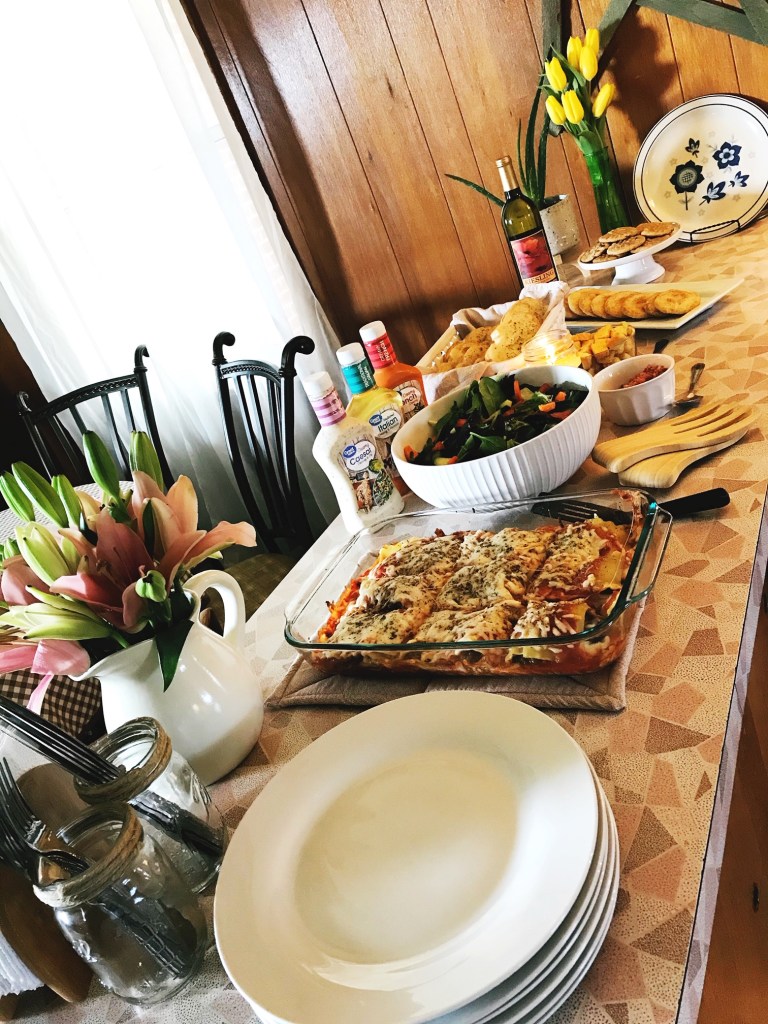
Homemade Lasagna

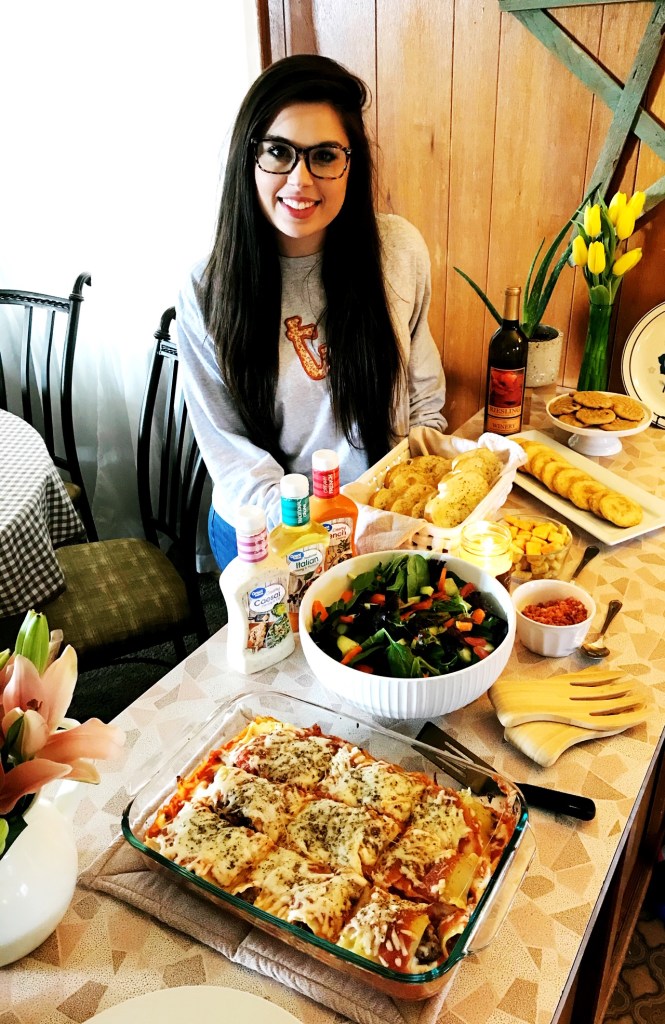
If you’re familiar with my blog or you follow me on social media, you know I have a long-standing and loving relationship with Italian foods. I love tomato sauce, noodles, Italian sausage, Italian bread – I love it! 

My boyfriend is going to feel totally played when he reads this week’s blog – because he’s always bragging about this dish and I act like it’s a chore or something – but my go-to dish to really impress someone is homemade lasagna. Everyone always thinks it’s so difficult, but I think that’s because buying the frozen is so typical, not because the dish is actually difficult to make. (Okay, it can be a little time consuming, but it’s really not that challenging. I promise – you can do it, no matter what the freezer section of your local grocery store wants you to think!) 

When I want to make someone feel special, if I want to feed a group of people, or if I’m just craving some good hearty Italian, lasagna is a go-to in my house. It’s warm, filling, and full of flavor. 

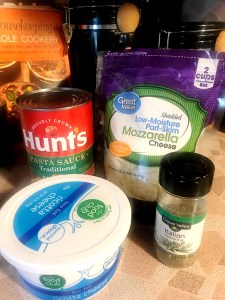
Here’s what you need:

  • Lasagna noodles 
  • 1 lb ground Italian sausage 
  • Ricotta cheese
  • Shredded mozzarella cheese
  • Italian seasonings
  • 1 can of Hunts pasta sauce 

Side note: Anyone else notice how I use Hunts in every Italian-inspired recipe? They don’t sponsor me or anything, but I’m promoting hard. Love that stuff! 

I’m using a 9×13 glass Pyrex pan most of the time, but sometimes I make a smaller one in a glass 8×8, and I just make heartier, thicker layers and use slightly less noodles. 

Okay, so let me share a few things you gotta know if you’re going to make my lasagna. 

#1 – You will dirty some dishes. I’m a tornado of a cook, but this dish allows for it because the lasagna has baking time, so there’s time to clean before people arrive or before you serve dinner! 

#2 – We don’t do those “oven-ready” noodles. No, no, no. Not in this house, y’all. Cook your noodles stovetop in water the old fashioned way. Cook them and control their level of done-ness to your preference. (That’s not a word, but you knew exactly what I meant, didn’t you?) 

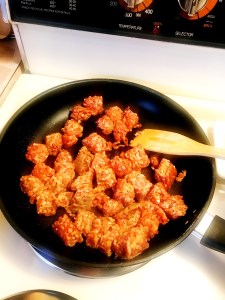
Okay! First things first: Start browning your Italian sausage in a pan on the stove top. You want the pieces small, but not totally minced. When you bite into that cheesy, saucy delightful dish, you want to KNOW there’s meat in there. So cook it, break it up, but don’t crumble it too much. About dime-sized on average is ideal. 

When you’re cooking the meat and you’re almost done – it’s mostly brown with a little bit of pink – sprinkle in a few dashes of Italian seasonings. Let them cook in as you finish the meat.

When that’s done, drain it. There won’t be a ton of grease, but you don’t want your lasagna to taste like ground-meat grease, so drain and set aside for a bit. Be sure you don’t rinse the meat though, or you might risk rinsing off the seasonings you added. 

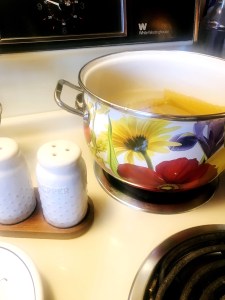
Next, boil your noodles to cook them. To know how many you need, you should pull out your glass baking dish and lay them out. (Break noodles carefully before cooking if you need them shortened to fit – either to fit your bakeware or your stovetop pot.) Always account for 3 layers of noodles in your dish and make 2-3 extra noodles – just in case. One always tears or sticks – or both! 

I cook my noodles until they’re almost where I want them. I usually let them be al dente, meaning a little firm to the bite, so that they hold up well to the sauce and the heat of the oven. 

Drain and rinse your noodles. 

As your noodles sit for a second, preheat your oven to about 350F.

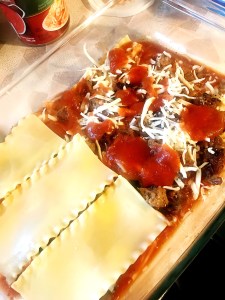
Pour a little bit of your sauce (and really – maybe 1-2 tablespoons max) on the bottom of your sprayed bakeware. Shift your dish so it spreads out evenly. It should be so thin that it’s see-through and more orange or pink than red. 

Lay down your base of noodles. Think of this like a chunky toddler puzzle – big pieces but you’re still going to look goofy as you struggle to fit them together! 

Once your base layer is laid down, take a scoop (using a small serving spoon or tablespoon) of ricotta cheese and plop it onto each row of noodles. Use the back of the spoon to smooth it out some so it’s spread as evenly as possible over the noodles. 

Warning: Some people will tell you that you can substitute cottage cheese for ricotta cheese. These people are not your friends; take them off of your Christmas card list immediately. The taste and texture are both exponentially better with ricotta, and the cost difference between the two products in store brand is too minimal for you to be stressed about needing a substitution. 

Next, spoon sauce onto your ricotta. Remember, you’re using one can of sauce, and it needs to be used for that tiny thin base layer, heaviest in the middle two layers, and a mild amount on the top, so keep that in mind as you spoon it in each step. 

You’re going to then use half of your cooked ground Italian sausage and distribute it evenly. Next, sprinkle shredded mozzarella overtop of the meat. And, y’all, we like our cheese, right? So don’t be light-handed here! (But do remember you have two more layers to use it on.) 

Now, repeat this first layer again to make your second layer. Noodle puzzle, ricotta spreading, sauce slathering, meat distributing, and cheese sprinkling galore! 

For your top layer, you will need to make a layer of noodles again, then forgo the ricotta and skip straight to the sauce. Spread it evenly across the entire top. Then, heavily sprinkle that shredded mozzarella! Now, add Italian seasonings across the top. 

Put this in the oven for approximately 30 minutes. Start with tinfoil for the first 20 minutes, then take it off for the last 8-10 minutes to let the cheese finish up. 

Because everything’s already cooked, you’re really melting cheese and setting the dish, so it can go longer or shorter as you decide is appropriate, but about a half an hour is what I usually do. 

Once I’m ready to pull it out of the oven, I wait a good 5 or so minutes for the dish to set before cutting and serving. If you’ve ever cut lasagna and it’s made a huge mess, you probably didn’t wait long enough after it was out of the oven before cutting into it. Cutting too early causes extra spillage of sauce and gooey cheese. You’re naturally going to have a gooey, saucy outcome with this recipe, but if you’re serving to your loved ones, you probably want it to look somewhat presentable, so I do suggest waiting that 5 extra minutes.

If you need something to do in your 5 minute waiting game, trying slicing up a loaf of Italian bread, drizzling olive oil over it, sprinkling on some garlic salt and Italian seasonings, and warming it in the oven on a sheet pan to then serve with your lasagna!

Enjoy!

Top 5 Parent’s Choice Baby Products to Use

Y’all – I am living that single mom life. Technically, I co-parent with my son’s father, but we’re fairly separate about it overall (save for updates on milestones and obviously sharing wellness/medical information), and I’m living life at the present with multiple jobs and lots of bills on one set of shoulders. I’ve gotten pretty decent at finding good deals – and discovering which name-brand products can be replaced with reliable store-brand products.

Maybe I’m in the baby mood because one of my very favorite people just recently had her first born and so many folks on my timeline are having babies or preparing to, but I’m excited to share with you my top 5 Walmart store-brand baby items!
If you don’t know, Walmart’s baby brand is called “Parent’s Choice.” Parent’s Choice has a TON of great baby and toddler products that I’d recommend, but I want to share my top 5 today.

* * *

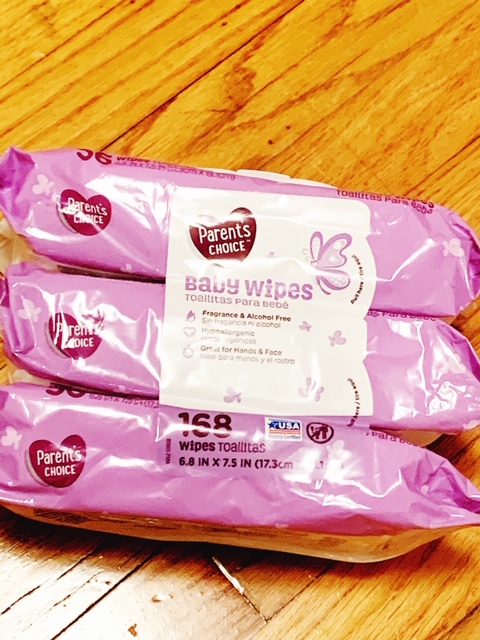
#1 – Wipes

Y’all, these fragrance-free wipes are great – they come in a three pack for under $3! My son has relatively sensitive skin, and they have never caused any issues. They’re affordable as can be! They also have a snap top for wipe removal, so unlike other low-cost options, they don’t dry out from hard-to-reseal sticky tabs.

#2 – Bath Soap

This night-time lavender bath soap totally competes with the name-brand options! It’s hypoallergenic, smells like soothing lavender, and is tear free. I love that it also has a pump – it makes it really easy to dispense during bath time. I also love that it’s a huge container – 28 fluid ounces – so it lasts a really long time, all for about $2.50-2.75.

And, if your little one likes bubbles – this stuff makes a really good-smelling bubble bath with just a few extra pumps.

#3 – Baby Lotion

Similarly, the Night-Time Baby Lotion from Parent’s Choice is also lavender-scented for a restful sleep, and it’s also hypoallergenic. It’s 15 fluid ounces for just under a buck – so it’s affordability is unreal. I still use this on my toddler, and I think it’s a great product that provides a lot of nighttime comfort as he snuggles into bed!

My only complaint is that I wish they kept larger ones with a pump in stock so that I could buy a bigger bottle each time – because we love this stuff at my house!

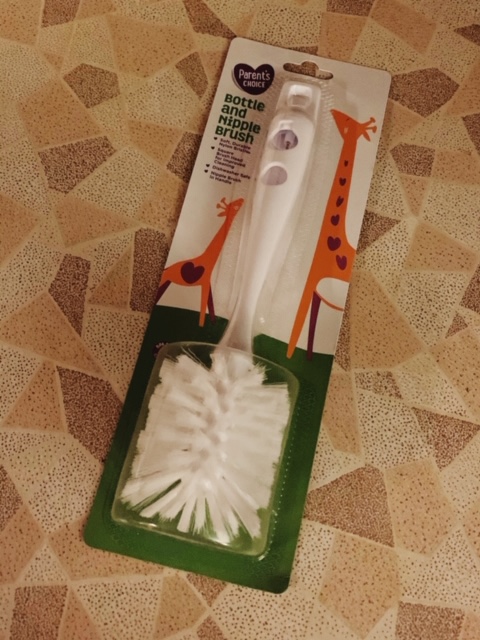
#4 – Bottle Brush

Even if you plan to use a dishwasher to sterilize your bottles, I absolutely recommend having one of these on hand! I don’t have a dishwasher at my rental, so I use this for toddler sippy cups too if they have a hard-to-clean lid. This is Parent’s Choice version is great because it still comes with the smaller lid/nipple cleaning brush, but doesn’t cost an arm and a leg. It’s less than $2, compared to approximately $5-7 from several basic name-brand options.

Once you’re little one is older, you can use these to clean vases, too!

#5 – Yogurt Pouches

When my son was transitioning to three meals a day, I started him on yogurt in the mornings. I would buy SO MANY of these during each Walmart trip! (He’s onto “big boy yogurt” now, but I keep a few handy for car rides or in case we run low on the drinkable yogurts.)

They’re made with real fruit, nonfat yogurt, and no artificial flavors, so they’re a healthy option too. They’re about $0.82 each, so they’re a decent deal compared to name-brand, which are over $1 each, and are a really good option.

Have you used any of these options from Walmart? What store brands do you love? Are there other good baby and toddler finds you’d like to share? Comment below!

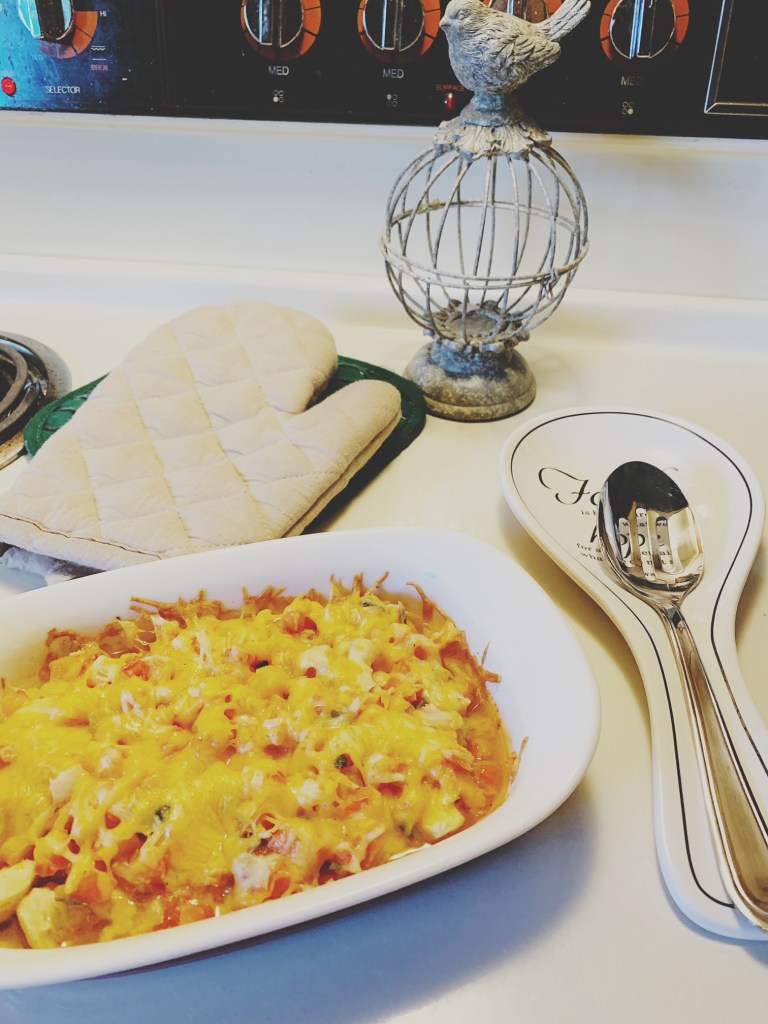
One-Dish Mexican Chicken

I love chicken, and I LOVE Mexican food. Right now, with COVID-19 precautions and stay-at-home mandates, I am seriously missing the comforts of my favorite local Mexican restaurants. So, I decided to play around with a new chicken dish of my own.

I’m all about the one-pan dinners – the ease of cleanup is too awesome to overlook – so my creation became a one-dish recipe.

You’ll need a small casserole dish. This one is about 4×6-inch mini casserole dish. Since it was just me eating this, I needed a smaller portion. You could easily double this recipe and use a larger piece of bakeware.

What you’ll need:

  • 2 chicken breasts – raw and thawed
  • ½ packet of taco seasoning
  • 1 cup of pico de gallo
  • ½-1 cup of taco-blend shredded cheese

Preheat your oven to 375F and spray the bottom of your bakeware.

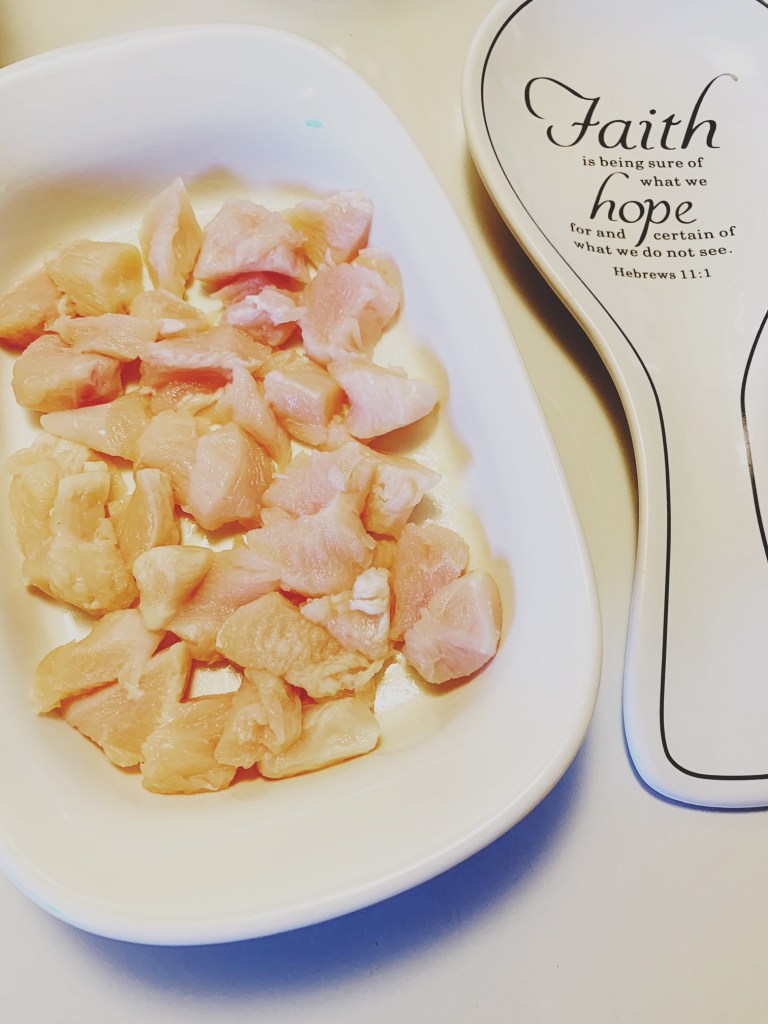
Cut up your raw, thawed chicken using kitchen scissors. The pieces of chicken should be in small, bite-sized cubes. Scatter them across the bottom of the sprayed pan, then sprinkle the taco seasoning over the chicken.

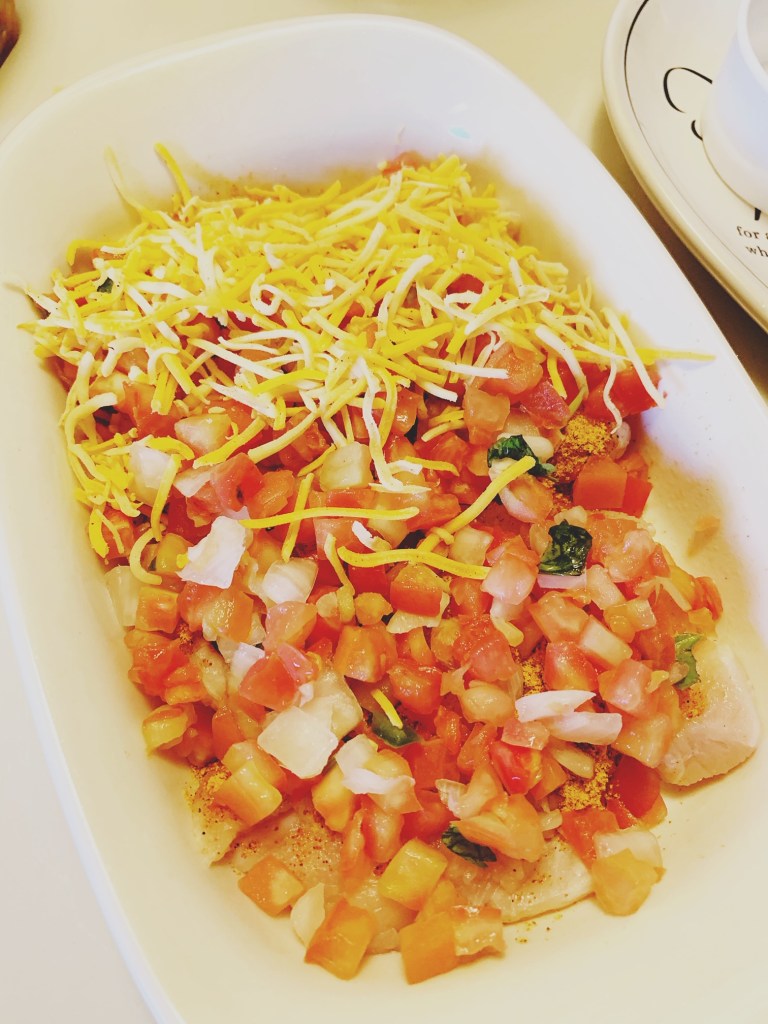
Sprinkle the pico de gallo over the chicken evenly. It should cover almost all, if not all, of the chicken. Then, you’ll want to sprinkle cheese on the top, covering it again.

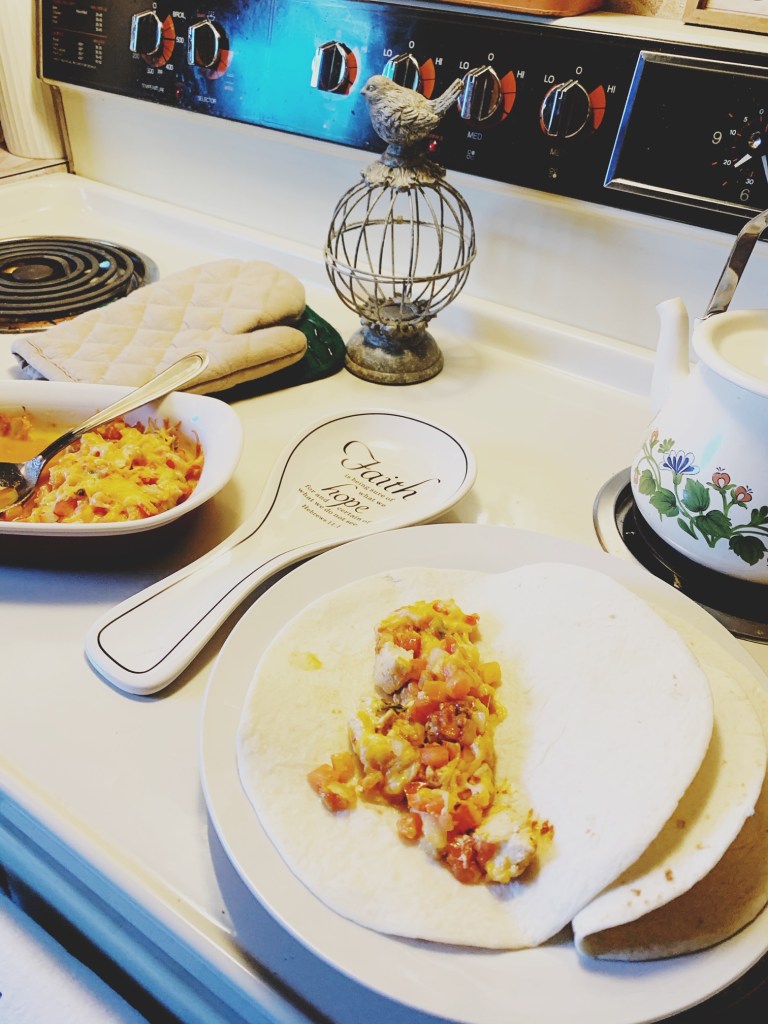
Bake the dish for 28-30 minutes at 375F. Upon removing the dish, serve with tortillas, rice, and/or tortilla chips. I’m counting calories while I’m doing a workout and wellness challenge, and it was only about 600 calories for dinner with just the 2 tortillas full. Of course, my Mexican-food cravings would be WAY more satisfied if I’d paired this with chips and queso!